From Curiosity to Calling: A Sattler Biology Alum’s Journey into Medicine
April 6, 2026 2026-04-06 16:45From Curiosity to Calling: A Sattler Biology Alum’s Journey into Medicine
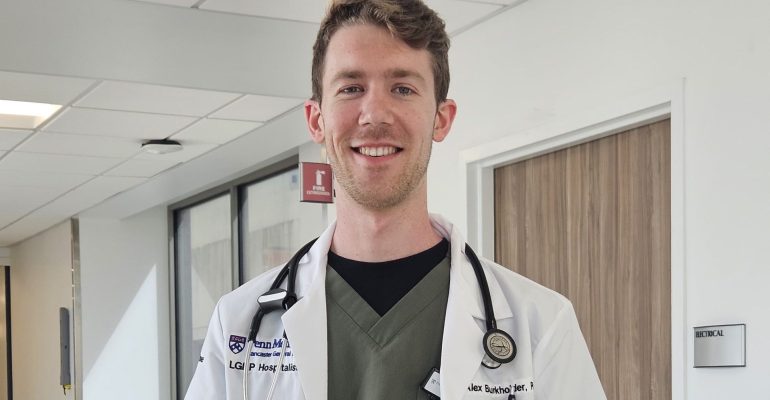
When people imagine the path to a career in medicine, they often picture massive universities, crowded lecture halls, and ruthless competition. But for Alex Burkholder, a Sattler alum, that path looked quite different. It began at a small, faith-centered institution right in the heart of Boston—Sattler College—which led him to where he is today: working as a Physician Assistant at Lancaster General Hospital. His story offers an honest and compelling look at what it’s like to study biology at Sattler—an experience that not only shapes professional trajectory but also spiritual lives.
Alex didn’t grow up imagining a future in medicine. In fact, his early interests were far from hospitals and textbooks—he spent his time working on cars. But something shifted when he began reading books like Gray Matter and Angels in the E.R., which sparked a curiosity about the human body and the world of healthcare. After a year at a college in his hometown, he found himself feeling both isolated and burdened by costs. Through a friend, he found an alternative: Sattler College. What stood out was not only the more affordable financial model—which has now been replaced by Entrustment Tuition—but also the opportunity to pursue a biology degree alongside courses in theology, church history, and the biblical langugaes. For Alex, this combination was the decisive factor.
One of Sattler’s most distinctive advantages is its location. Situated in Back Bay, students are surrounded by some of the most prestigious medical and research institutions in the world, including Massachusetts General Hospital, Harvard, and a network of leading laboratories. As Alex described it, Boston is “the research hub of the world.” This proximity opens doors that many undergraduates never experience. Students can supplement their coursework with classes at nearby institutions, engage in high-level research, and pursue internships that provide real professional exposure. Alex, for example, as an upperclassman, biked regularly the short distance to Mass General, where he worked in the Department of Genetics and Aging as a research intern. He studied how immune cells move through the body using microdevices—isolating cells, applying dyes, and observing their behavior through time-lapse imaging. Even though he did not plan to pursue research long-term, the experience provided Alex with insight into the professional lab environment and invaluable experience as a researcher.
The Human Biology program at Sattler is designed to provide a rigorous foundation in biological sciences, particularly focused on the human body and its well-being. Students are given the opportunity to marvel at God’s handiwork, and grow exponentially in academic knowledge.
Courses like Anatomy and Physiology left a lasting impression on Alex. He shared with me,, “I cannot believe how incredibly complex the human body is. I loved taking that class.” At the same time, classes on general and organic chemistry challenged him to become more disciplined and develop perseverance while learning the foundational principles behind therapeutic molecule development. Pathophysiology stood out to him in particularbecause it connected biochemicall theories to real-world diseases, helping bridge the gap between classroom learning and clinical application for his own future career.
What makes Sattler’s biology program truly distinctive, however, is not just its scientific rigor but its integration with Biblical studies. Every student engages in a core curriculum that emphasizes learning Biblical languages, Scripture itself, theology, and Christian thought. For Alex, one of the most impactful classes was “Fundamental Texts of Christianity.” He described it in terms strikingly similar to his awe of the human body he experienced in “Anatomy and Physiology.” Just like there were many things he didn’t realize were in the human body, he said, “Whoa, it’s mindblowing—there’s so many things in the Bible that I didn’t realize.” Both the complexity of the human body and the depth of Scripture inspired a sense of awe, and both required careful study to truly understand. This grounded him theologically and better equipped him to navigate the ethical and philosophical challenges that arise in medicine. Sattler’s biology students also take a Bioethics class in which pivotal contemporary issues of life and medicine are deliberated. It also influenced how he views patients—not simply as biological systems, but as individuals created with inherent dignity and purpose.
Like many academic programs, Sattler’s biology track involves a balance between foundational knowledge and applied learning.Nevertheless, students still engage in meaningful practical work through lab courses, dissections, and especially their capstone projects. In Alex’s case, his research at Mass General became the most significant hands-on component of his education. Additionally, anatomy labs at nearby institutions, such as Northeastern, allowed students like Alex to engage directly with biological specimens, further reinforcing their understanding of the human body.
Mentorship plays a central role in the Sattler experience, and Alex consistently pointed to Dr. Beth Bennett as a key influence in his journey. As the biology program coordinator, she invested deeply in her students, helping them navigate academic decisions and career paths. This kind of close guidance is a hallmark of Sattler’s small college environment. Professors strive to be accessible mentors who take a personal interest in each student’s growth. This support extends beyond academics, shaping students’ confidence and helping them discern their calling.
The small size of Sattler also fosters a strong sense of community. As Alex put it, the “small school lends itself to knowing people well.” Students build meaningful relationships with one another, studying alongside peers who are not only academically driven but also committed to their faith. This environment creates opportunities for encouragement, accountability, and shared growth. Alex also emphasized the role of his church community during his time in Boston, which contributed significantly to his personal and spiritual development. Together, these relationships helped him become not only a better student but a more grounded and compassionate person.
One of the unique aspects of attending a small college is the opportunity to take on leadership roles and leave a lasting impact. Alex experienced this firsthand by co-founding the Pre-Health Association Club alongside another student. As president, he helped create a space where biology students could support one another, share resources, and prepare for careers in healthcare. This experience developed his leadership skills and gave him a sense of ownership in shaping the student experience at Sattler.
When Alex began his studies, he initially planned to pursue nursing. However, over time, his goals evolved. By his junior year, he decided to pursue a path as a Physician Assistant, drawn by the flexibility it offered and the shorter training timeline compared to medical school. Sattler’s program supported this transition, especially as it expanded to include multiple specialized tracks within the biology major:
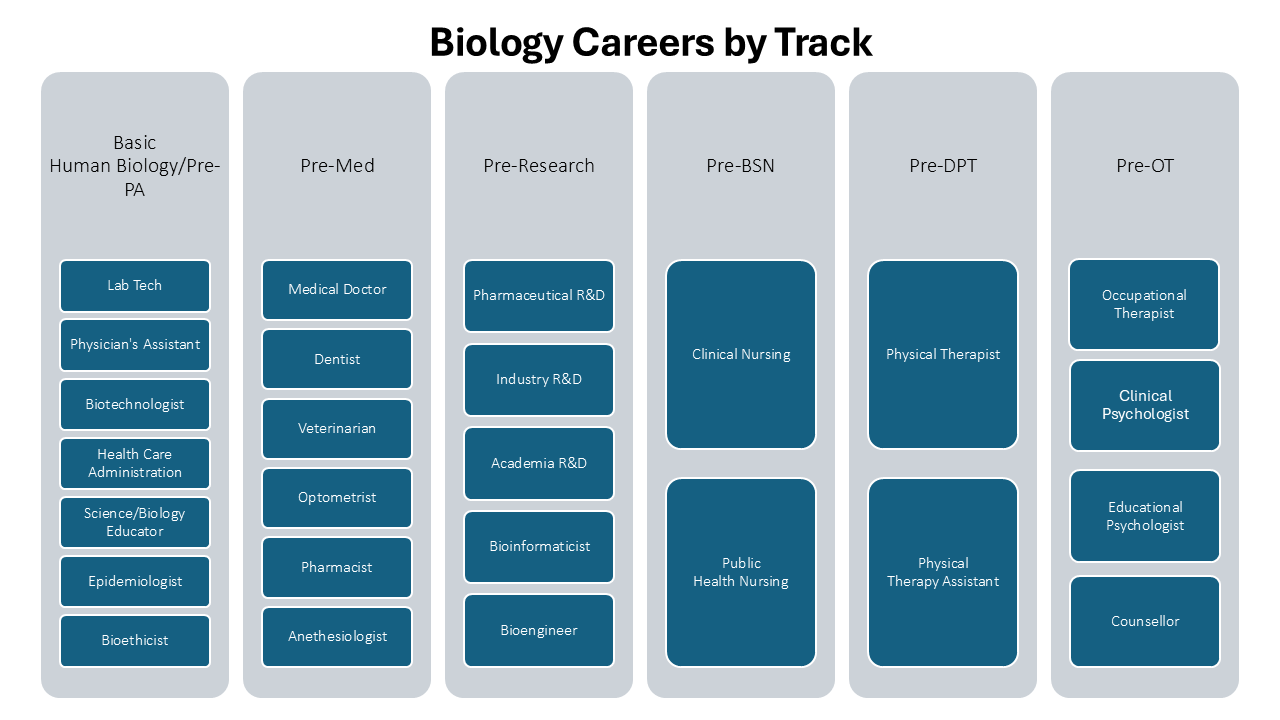
This diversity of pathways allows students to tailor their education to their specific goals, whether they aim to enter clinical practice, research, education, or other fields.
After graduating from Sattler, Alex continued his education at Lock Haven University, completing his Physician Assistant degree in 2025. Today, he lives in Reading, Pennsylvania, and works at Lancaster General Hospital. His days begin early, typically around 7 a.m., when he reviews patient charts and prepares for the day. Much of his work involves meeting newly admitted patients, coordinating care, managing medications, and communicating with specialists. As he describes it, the job is split between interacting with people and handling documentation. The variety of cases—from heart failure to infections—makes the work both intellectually challenging and spiritually rewarding, providing a strong foundation for his future in medicine.
Despite his success, Alex is candid about the challenges he faced along the way. The journey through a biology major and into graduate school can be intense, with constant pressure to achieve high grades, gain clinical experience, and meet competitive standards. He admitted that during his junior year, he became highly focused on academics, sometimes at the expense of relationships and personal well-being. This is a common phenomena for Pre-Health students, but Sattler’s Christocentric environment helped him rebalance faster than he might otherwise have done.
Reflecting on his experience, Alex offers advice that is both honest and encouraging. “Give yourself grace and believe that it will work out in the end,” he says. He reminds students that there is no such thing as a perfect candidate and that everyone feels underqualified at times. In fact, he suggests that graduate school may not be more difficult than Sattler itself because of the robust foundation with which Sattler equips its students. His perspective challenges the culture of constant pressure in the professional world.
Ultimately, when Alex looks back on his time at Sattler, he speaks about transformation. He points to the relationships he built, the faith he developed, and the person he became. “I feel like I am a stronger person because of the people I engaged with,” he reflects. He also notes that he is more theologically grounded and better equipped to engage with the ethical dimensions of medicine. This formation continues to shape how he interacts with patients and approaches his work as a healthcare provider.
For prospective students considering the Human Biology program at Sattler College, Alex’s journey highlights a unique combination of strengths: the unparalleled opportunities of Boston’s medical landscape, the personalized mentorship of a small academic community, the integration of rigorous science with deep Biblical study, and the flexibility to pursue a wide range of healthcare careers. It is not an easy path, but it is one that offers both intellectual challenge and spiritual growth.
Sattler’s Human Biology program will stretch you, challenge you, and at times push you to your limits. But it will also call you deeper—a way of seeing the human body not just as a subject of study, but as a reflection of something greater. That perspective makes all the difference.