
Presidential Newsletter #17
November 29, 2025 2025-12-01 18:32Presidential Newsletter #17

Dearest Sattler Stakeholders,
I’m eager to share to share Presidential Newsletter #17. Onward to power, love, and sound minds/discipline (2 Tim 1:7).
ETS & Sattler Events
Many Sattler students, staff, and faculty attended the 2025 Evangelical Theological Society meetings in Boston last week. ETS gathers scholars to discuss biblical interpretation, theology, church history, and more. It’s a valuable environment for sharpening critical thinking, hearing major debates, and meeting authors whose work shapes the church.
Sattler students and staff participated in a number of events around Boston during the week, including a hymn sing with Keith and Kristyn Getty at Tremont Temple and the public debate between Mike Licona and Bart Ehrman on Gospel authorship, where Sattler hosted an information table. Because ETS was local this year, many of the speakers were also able to visit our campus and share their work with our community.
Talks on the Sattler campus included the following:
- Dr. Gregg Davidson: Science, the Bible, and Noah’s Flood
- Dr. Davidson showed how genre and literary design in Genesis shape wise interpretation of the creation and flood accounts. He then compared what different scientific models would expect to find in Earth’s geology and encouraged students to evaluate the evidence with clarity and care.
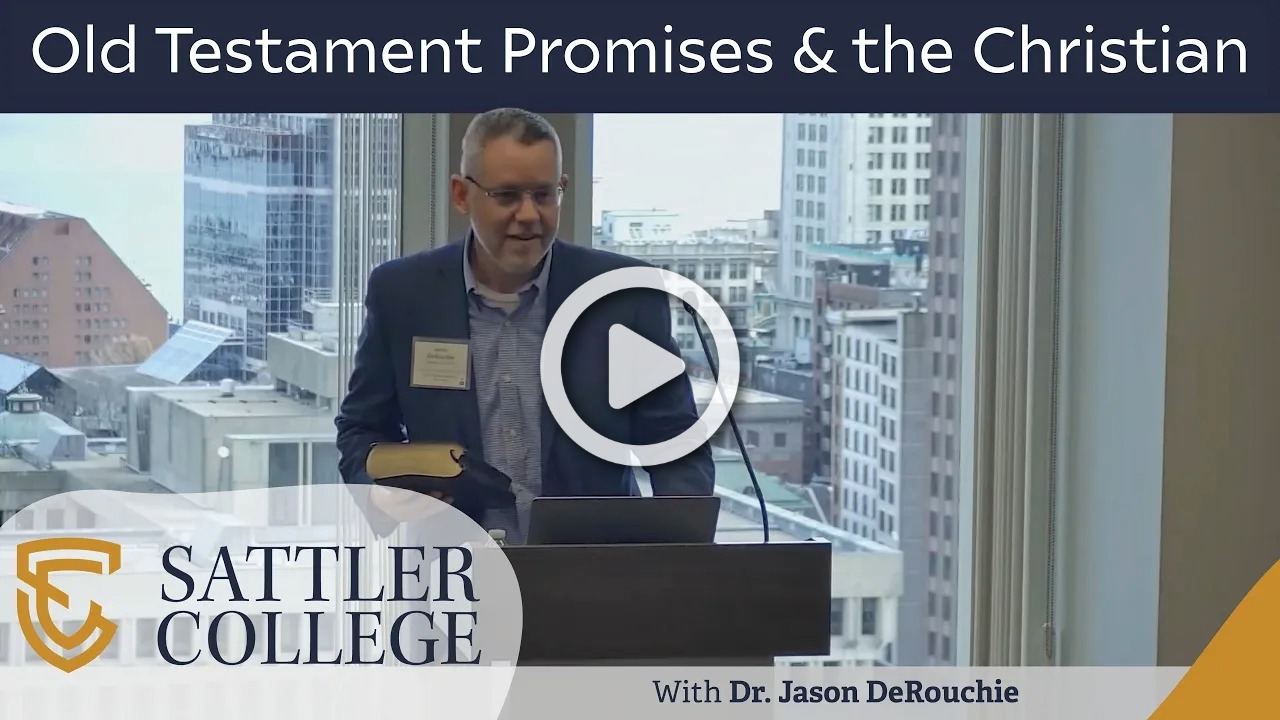
- Dr. Jason DeRouchie: Old Testament Promises & the Christian
- Dr. DeRouchie showed how God’s promises fuel both holiness and hope, giving strength against anxiety, temptation, and suffering. He then explained how Christians can faithfully apply Old Testament promises today through their fulfillment in Christ.
- Dr. Robert Plummer & Dr. Benjamin Merkle: Maintaining Your Greek
- Drs. Plummer and Merkle urged students to see Greek as a gift for opening the New Testament with greater clarity and delight. They showed how even modest skill in the language sharpens interpretation, deepens devotion, and builds lifelong habits of faithful study.
- Dr. Thomas J. Millay: A Discussion on Kierkegaard’s Critique of Christian Nationalism (talk hosted by a student club)
- Dr. Millay explained how Fear and Trembling presents Abraham’s faith as a refusal to conform to the social ethics of his nation. He then showed how this challenges Christian nationalism by calling believers to follow Christ in humble, costly discipleship rather than national self-assertion.
- Dr. Michael Bird: My Life as a “Gospelizer”
- Dr. Bird shared how Christ reshaped his life and why he now calls himself a “gospelizer,” someone formed by the good news. He showed how Jesus’ kingdom message and Paul’s gospel unite into one story and encouraged students to read Scripture deeply through Biblical languages and historical context.
Dr. DeRouchie’s talk is linked below. The rest will appear on our YouTube channel in the coming weeks, so keep an out for those.
Grad School Acceptance
I would like to extend a hearty congratulations to Austin Ressler (Class of 2025) for his acceptance into medical school. Austin has been serving in Ukraine to help bring badly needed medical care and supplies to those who are suffering. I am very proud of his sacrificial service and look forward to watching how God will use him as a physician.
Morale Day
November 4 was Morale Day at Sattler, a time each semester when we pause from academics to focus on rest, service, and community. Students served at Toah Nipi, a Christian retreat center, and at L’Arche, a home for adults with intellectual disabilities, helping with wood splitting, raking, cleaning, and other hands-on projects. That same day, Sattler faculty and staff gathered for conversations around what makes an ideal Sattler team, strengthening our unity and shared mission.


Alumni Event
We hosted our first regional alumni event on October 30 in southern Pennsylvania. Dr. Hans Leaman joined our alumni there and offered insights from the migration research he recently presented in Rome, with particular attention to how Christians, including Anabaptists, have shaped thought and policy on migration in the decades since World War II.
Question of the Month
To compete in the contest, answer this question without the use of AI, Google, or other forms of “cheating.” (In other words, you should know the answer.) Click here to submit your answer for a chance to win! This month’s prize is a copy of my book King Jesus Claims His Church. If multiple people get it right, we will select one of those winners for the prize.


